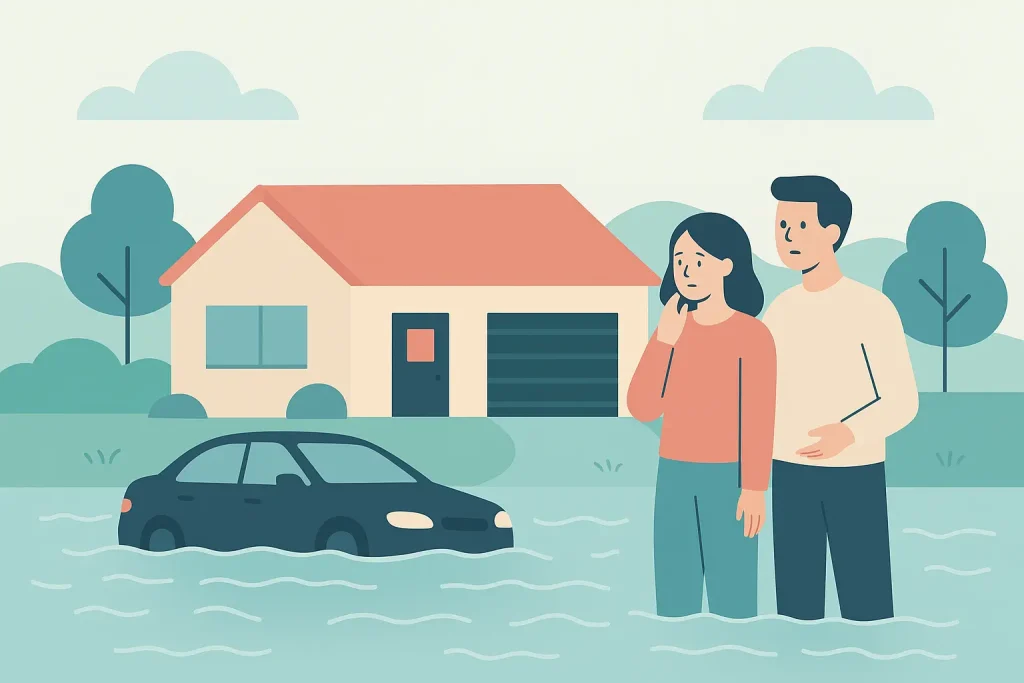
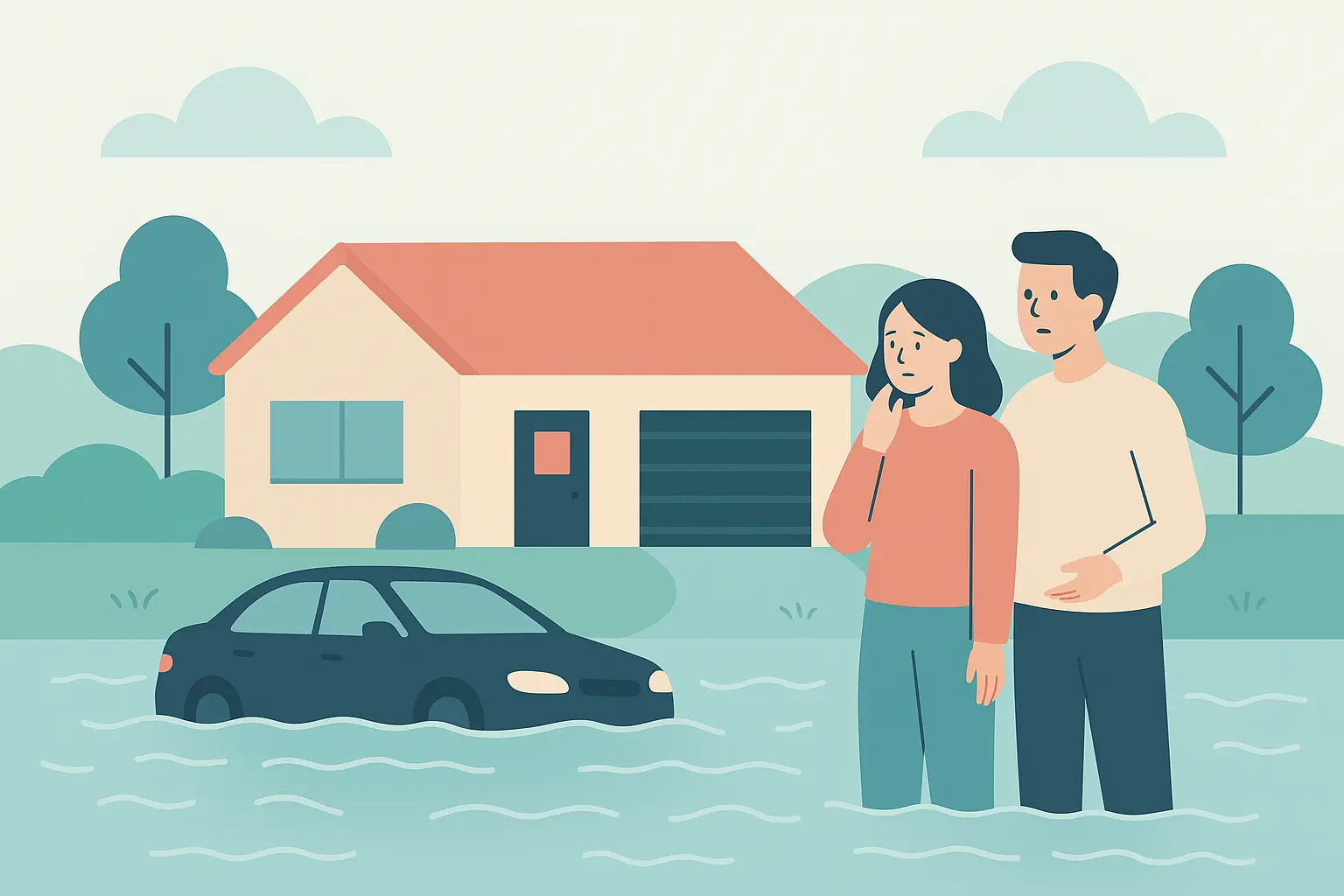
If your driveway turns into a paddling pool every time we get a proper downpour, you are not alone. I have lost count of how many homeowners in Prestwood, Hazlemere and the Chalfonts have asked me why it was fine for years and then suddenly starts flooding. In most cases it comes down to drainage, levels and how the driveway was built in the first place.
Before you think about ripping everything out, it helps to understand what is going wrong and what modern professional driveway drainage solutions actually involve. In 2026, there are clearer rules and better materials available, so you have more options than you might think.
Why Driveways Flood: Common Causes Homeowners Face
The most common cause I see is simple: water has nowhere to go. Older driveways were often laid with little thought for drainage. Concrete or standard block paving was put straight down with a slight fall towards the road or worse, back towards the house.
Over time, things shift. The sub-base settles, blocks dip and what used to be a gentle slope becomes a shallow basin. When we get one of those heavy Buckinghamshire cloudbursts that fill the gutters in minutes, the water just sits there.
Here are a few typical issues I come across:
- Poor or non-existent falls so water does not run away from the property
- No drainage channels to catch surface water
- Blocked or silted-up soakaways
- Driveways paved over front gardens without proper permeable design
- Thresholds that sit too low compared to the drive level
Clay soil is another problem locally. Around parts of Amersham and the Chalfonts in particular, the ground does not drain freely. So even if the surface looks fine, the water has nowhere to soak away beneath it.
What’s Changed in 2026: Drainage Rules and Best Practices
People are often surprised to learn that driveway drainage has been regulated for some time. The basic rule is that new or replacement driveways over a certain size must not simply dump water onto the highway. Surface water should drain into a permeable area within your property boundary.
In 2026, councils are taking this more seriously, particularly after the winter flooding we had across parts of High Wycombe. If you are planning a new driveway or major upgrade, you need to think about compliance from day one.
Best practice now usually includes:
- Permeable block paving systems that allow water to pass through the joints
- Well-sized soakaways designed to suit the local soil
- Linear drainage channels connected to proper outfalls
- Clear separation between surface water and foul drainage
I often get asked, “Can’t we just add a drain across the front?” Sometimes yes, but it depends on where that drain sends the water. A channel that discharges straight into an already overloaded system will not solve much.
Top Solutions to Stop Driveway Flooding for Good
The right fix depends on what is causing the flooding. There is no one-size-fits-all answer, and I would always want to see how the levels work in relation to your house and the road.
1. Improving the Falls
If the driveway is fundamentally sound but poorly graded, lifting and relaying the surface with the correct fall can make a huge difference. Water should move away from the property and towards a suitable drainage point, not pool near the garage door.
2. Installing Linear Drainage Channels
These are the slim grates you often see across the front of garages. When installed properly and connected to a soakaway or suitable outlet, they intercept surface water before it reaches your home. They need regular cleaning though. I have seen plenty in Chesham full of leaves and gravel, effectively useless.
3. Switching to a Permeable System
For older, fully sealed concrete or traditional block drives, it can be worth considering a permeable block paving system. These are built over a specially designed sub-base that temporarily stores water and lets it soak into the ground slowly. Around areas like Chesham, where space can be tight, this is often a practical long-term solution.
4. Upgrading or Adding a Soakaway
If you already have drainage channels but still get flooding, the soakaway may be undersized or clogged. Modern crate systems are more efficient and easier to size correctly compared to old rubble-filled pits.
Choosing the Right Driveway Upgrade for Your Property
When deciding what to do, think beyond just stopping the water this winter. A proper upgrade should protect the foundations of your home, reduce maintenance and add value.
Ask yourself a few practical questions:
- Is the driveway sloping towards the house?
- Are there damp patches on the lower brickwork after rain?
- Has the surface started to sink in places?
- Do neighbouring properties have similar issues?
If you are in Prestwood or Hazlemere and your neighbours are also struggling, it may be a broader ground drainage issue rather than just your individual drive. I have seen entire terraces where the original falls were simply wrong from day one.
In some cases, a targeted repair and improved drainage detail is all that is needed. In others, particularly where the sub-base has failed, replacement is the more sensible long-term option. Spending a bit more now on proper groundwork usually saves a lot of frustration later.
Driveway flooding is frustrating but it is fixable. With the right design and materials, you can have a surface that copes perfectly well with the sort of heavy rain we seem to be getting more of each year. If you would like practical advice tailored to your property, get expert help with your driveway – book a consultation today. The team at Mammoth Services can assess what is really going on beneath the surface and recommend a solution that is compliant, durable and right for your home.