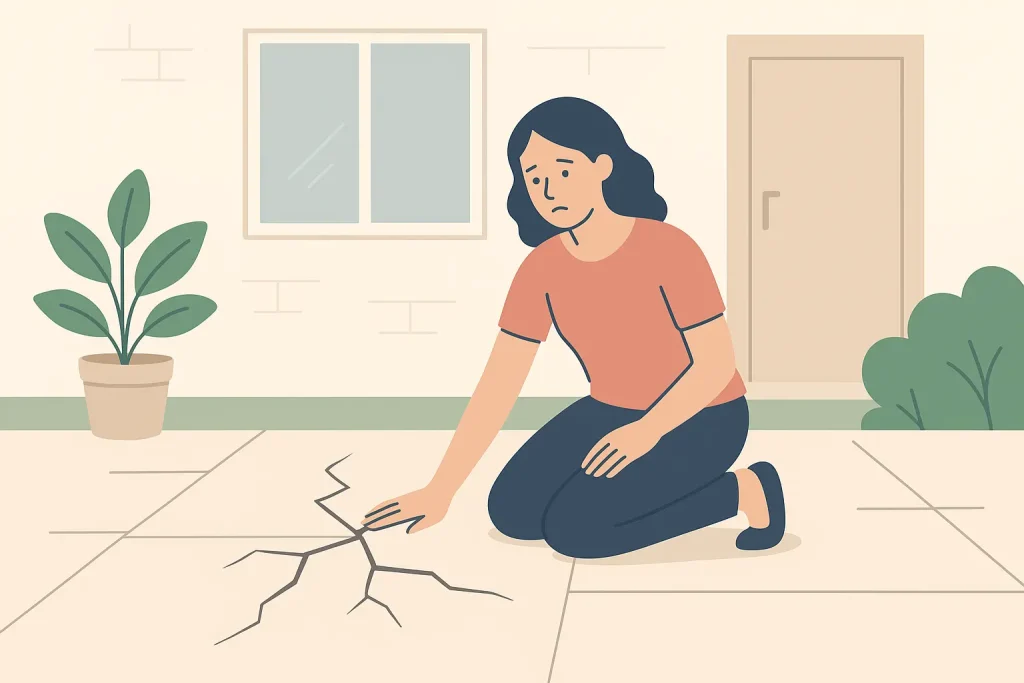
If you’ve noticed cracks creeping across your patio slabs, you’re not alone. It’s one of the most common questions I hear when chatting to homeowners about patio and paving services. A crack might start as a thin line you barely notice, then after a winter or two it spreads, edges lift and suddenly the whole area looks tired.
The key question isn’t just how to fix it, but why it’s happened in the first place. Once you understand that, it becomes much easier to decide whether a straightforward repair will do the job or if replacement is the better long term move.
Common causes of cracking slabs
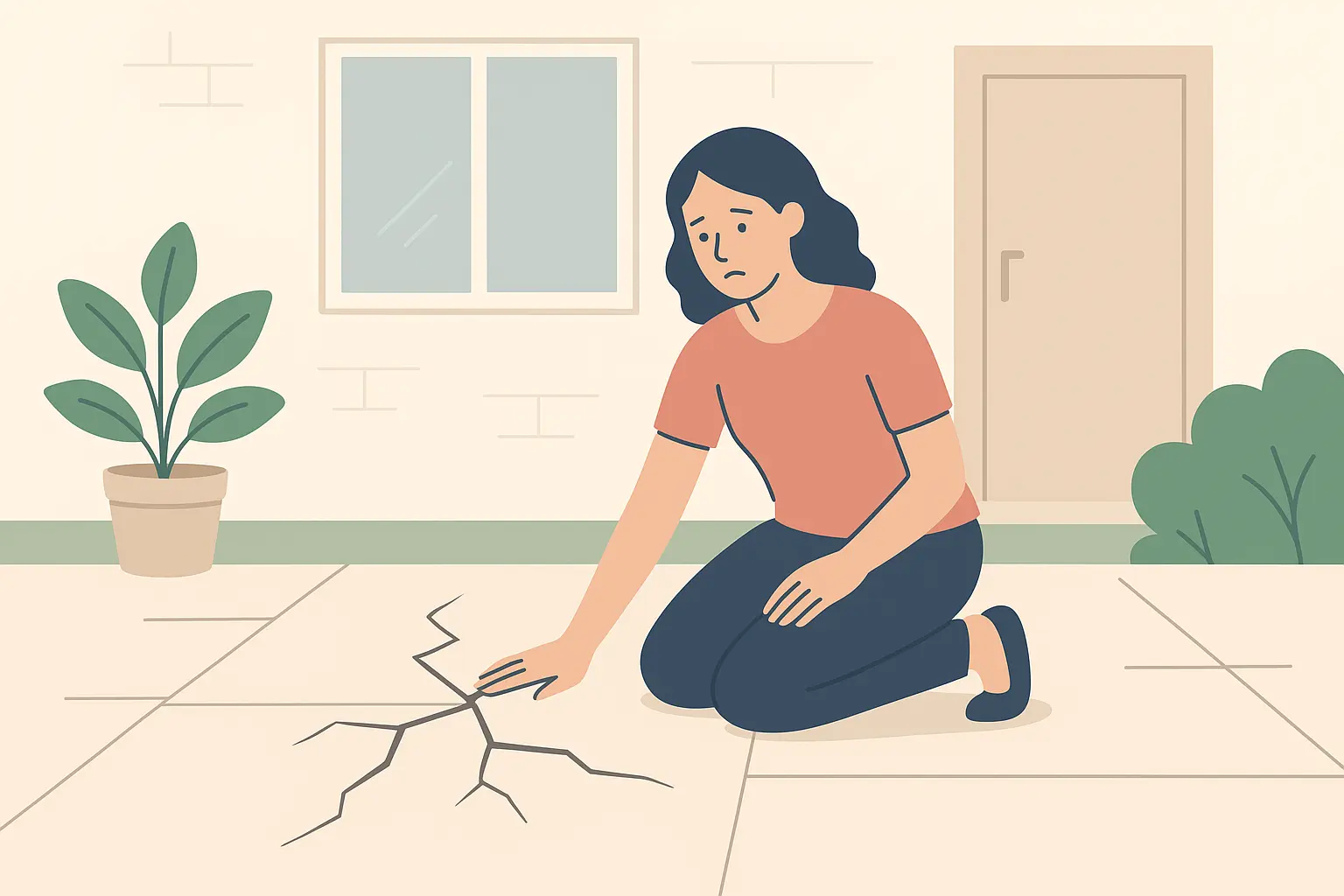
Slabs don’t usually crack for no reason. In most cases there’s an underlying issue, and unless that’s dealt with, new slabs can end up doing exactly the same thing.
Ground movement
In parts of Buckinghamshire and Hertfordshire we see a fair bit of clay soil. Around areas like Chalfonts and Prestwood, the ground can shrink in dry spells and swell again when it’s wet. That movement underneath the patio puts stress on the slabs above. Over time, something has to give.
Poor installation
This is probably the biggest culprit. I’ve lifted plenty of cracked slabs in places like Berkhamsted only to find they were bedded on a few dabs of mortar instead of a full solid bed. It might look fine at first, but those hollow spots mean the slab isn’t properly supported. As soon as someone puts weight on a weak corner, it cracks.
Weather and wear
Freeze and thaw cycles are hard on concrete and natural stone. Water seeps into tiny surface pores, freezes, expands and slowly weakens the material. Over several winters the surface can start to flake, then larger cracks appear. Add regular foot traffic, heavy planters or the barbecue that never seems to move and the damage accelerates.
When a repair is enough vs when replacement is the better option
This is where a bit of honest assessment helps. Not every crack means the whole patio is doomed.
A repair is usually enough if:
- Only one or two slabs are cracked
- The base underneath is still solid and level
- The cracks are hairline and the slab is not rocking
- The rest of the patio is in good condition
In those cases, lifting and replacing individual slabs or applying a suitable filler for minor surface cracks can buy you many more years. Matching the slab can sometimes be tricky if it’s an older style, but structurally it’s often straightforward.
Replacement is usually the better option if:
- Several slabs are cracked across the area
- You can feel movement underfoot
- Water pools in certain spots
- The sub base was poorly installed from the start
If the foundation is the problem, patch repairs are just that, patches. I’ve seen homeowners replace the same slab three times because the base was uneven. In that situation, lifting a larger section and rebuilding it properly saves money and frustration in the long run.
Cost comparison: repairing vs replacing patio slabs
From a purely short term view, repairing is cheaper. Swapping out a couple of slabs is far less labour and material than relaying an entire patio.
But cost needs to be looked at over time. If you repair three slabs this year, two next year and then end up replacing the whole lot in five years, you’ve effectively paid twice. That’s why the condition of the base matters more than the crack itself.
When customers ask me what I would do on my own house, I always say this: if the structure underneath is sound, repair it. If the structure is failing, bite the bullet and rebuild it properly once.
How to prevent future cracking
Whether you repair or replace, prevention comes down to good groundwork and simple maintenance.
- Ensure a solid sub base, typically well compacted Type 1
- Lay slabs on a full mortar bed, not spot bedding
- Allow for proper drainage so water does not sit on the surface
- Use jointing that keeps water from washing out the bedding layer
- Keep gutters and downpipes clear so excess water is not directed onto the patio
I often point out small things homeowners can do, like moving very heavy pots occasionally or brushing in fresh jointing sand where it’s washed out. It sounds minor, but those details make a difference over ten or fifteen years.
Conclusion: Making the right long term decision
Cracked patio slabs are frustrating, but they’re also a useful warning sign. They tell you something about what’s happening underneath. Take the time to work out whether it’s a small isolated issue or a wider foundation problem. Repair where it makes sense, replace where it will genuinely solve the cause rather than just the symptom.
If you’re unsure, getting an experienced eye on it can save guesswork. The team at Mammoth Services can assess the condition of your patio and give straightforward advice on the best way forward. Get expert advice and a free quote here.